

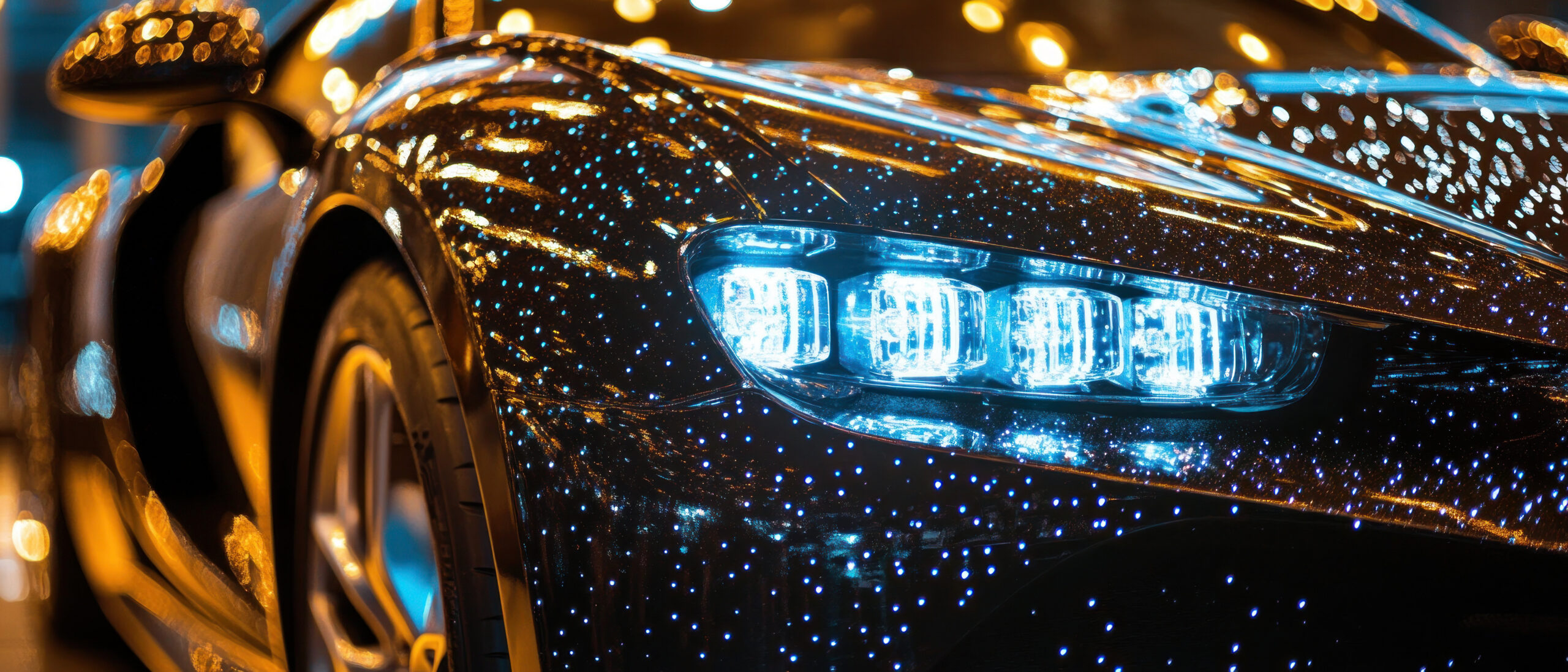
 The growing prevalence of higher-intensity headlights on vehicles is contributing to a rising Indiana roadway safety concern: excessive LED headlight glare.
Glaring LED Headlights
Imagine driving home after a long day on a dark Indiana roadway. Suddenly, an oncoming vehicle appears with headlights so bright that the road ahead vanishes into a blur of white light. For several critical seconds, you cannot see the lane markings, the shoulder, or the hazard directly in your path. At highway speeds, those seconds can be the difference between arriving home safely and suffering a life-changing injury.
As vehicles increasingly utilize powerful LED lighting systems and aftermarket modifications, concerns about excessive headlight glare continue to grow. While bright headlights may improve visibility for one driver, they can create dangerous conditions for others. When a crash occurs and excessive glare contributes to the collision, injured victims may be left facing substantial medical expenses, lost income, and a difficult recovery. When incidents like this occur, our Indiana personal injury lawyer can help you sort out injuries and expenses for future compensation.
Understanding how bright headlights can affect driver visibility is an important first step in evaluating potential liability and protecting your legal rights.
Who is at risk for temporary blindness from LED headlight glare?
For those people who are not prone to light sensitivity, this may seem like a non-issue. But there are millions of Hoosiers who struggle with extreme headlight glare in night driving environments. The reasons people struggle with temporary blindness from oncoming LED headlights are many and varied.
- Older adults – Lenses in older adults become less transparent over time and tend to scatter more light from environmental molecules called free radicals, which damage the lens proteins and cells.
- Cataracts – In older adults, cloudy lenses scatter light, forming bursts of light, halos, and a veil of glare, causing temporary blindness, which may be amplified by LED headlight glare.
- Migraine Sufferers – The acute blue-light LED headlights can trigger a migraine attack or cause an existing migraine to worsen. Between 30%-60% of migraine sufferers are triggered by glare, bright light, and blue-light irradiance.
- Astigmatism – Nearly one-third of Americans suffer from astigmatism. People with astigmatism can become distracted by distortions caused by glaring headlights, such as starbursts, halos, and streaking around headlights, increased sensitivity to glare, and reduced contrast.
- Neurological Conditions – Certain neurological conditions, including brain injury and concussion, may show increased sensitivity to light.
- Large Pupils – People with larger pupils, particularly in low-light environments, may experience an intense reaction to acute blue-light LED headlight glare since larger pupils allow more light to enter the eye.
- Medications – There are certain prescription medications – antihistamines, acne medications, antidepressants, and certain antibiotics – that may cause sensitivity to LED headlight glare.
- Diseases of the Eye – Ocular diseases such as glaucoma and macular degeneration.
From halogen bulbs to LED headlamps
Early motor vehicle headlights
Early cars were fitted with standard halogen bulb headlamps. These bulbs put out approximately 1000 lumens—a standard international unit that measures visible light intensity.
Next, the xenon headlight was introduced—a glow similar to daylight passes an electrical discharge through ionized, high-pressure xenon gas. The xenon bulb, in lumens, was as high as 8 times the luminosity of halogen headlamps (i.e., 8,000 lumens), but it provided an excellent continuous spectrum across ultraviolet, visible, and infrared light.
The introduction of LED headlights to auto manufacturers
In the mid-2000s, auto manufacturers began to usher in LED headlights, measuring as bright as 10,000 lumens. Over time, and as late as 2023, xenon headlights became extinct in the auto industry.
LED headlights crown in the blue/white spectrum of light, making them appear ever brighter than earlier headlamp solutions—thus creating a glare in low-light situations which may cause temporary night blindness for many Indiana drivers. Auto manufacturers recognized this concern and assumed the responsibility of limiting lumens and conforming with safety regulations.
Aftermarket LED headlight sales
The Insurance Institute of Highway Safety (IIHS) claims that automobile manufacturers have been steadily improving their headlight systems since the IIHS began scoring vehicles in 2016. Often, the problem lies with the aftermarket sales. By that I mean the replacement of an auto manufacturer’s original bulbs, housing systems, or both with glaring LED headlights.
In other words, parts stores and online outfitters have taken LED’s blue/white radiation to a whole new level—in some cases as high as 60,000 lumens.
Indiana law
Neither the NHTSA nor Indiana currently has a law on the books to address the maximum number of legal lumens. However, the state of Indiana does have a law that directly addresses headlight “glare.”
Under Ind. Code § 9-21-7-5(b), drivers approaching an oncoming vehicle within 500 feet must use a beam aimed so that “the glaring rays are not projected into the eyes of the oncoming driver.” The phrase “glaring rays” is a solid statutory reference, expressly recognizing the dangers of headlight glare and a vehicle operator’s responsibility to protect oncoming drivers from blinding LED headlight beams.
Tracking LED headlight glare as a factor in accidents
The “Indiana Officer’s Standard Crash Report” documents the facts of an accident investigation by the lead responding officer on the scene. At this time, the crash report does not include a data-centric check box specifically for “glare” or “headlight glare” as either the primary cause or as a contributing factor to the accident. Although responding officers may add “headlight glare” to the report’s narrative section, the keyword “headlight glare” is not included in the statistical analysis.
Thus, the state of Indiana is one of many states that do not yet quantify the cause of excessive LED headlight glare. Consequently, there is currently no way to statistically track the adverse effects of LED headlight glare on other drivers. And without those numbers, it is impossible to track the effects that glaring LED lights have on oncoming drivers.
LED headlight glare —a growing concern in Indiana and across America
Concern about excessively bright headlights is widespread and growing. AAA recently reported that 60% of drivers say headlight glare is a problem in low-light situations, and nearly three-quarters of those affected believe the issue has become worse over the last decade.
With millions of Indiana motorists driving after dark, the growing debate over bright LED headlights has raised concerns over driver safety and whether or not current regulations adequately address modern lighting technology.
A solution: Adaptive Driving Beam Technology
European car manufacturers have utilized modern adaptive beam technologies (also known as matrix headlight technologies) for more than fifteen years.
By using cameras, software, and sensors—on-vehicles, computers can detect and adjust headlights by shading the beam before oncoming drivers become blinded by LED headlight glare.
Unfortunately, matrix headlight technology does not fit in with America’s standard “low-beam/high-beam” regulations and did not pass the US compliance testing. But fortunately, the National Highway Traffic Safety Administration approved the use of adaptive beam technology in 2022, and US manufacturers are starting to implement the technology in their vehicles.
In fact, some auto manufacturers only need to update their software in order to utilize adaptive beam technology. Universal adaptations of matrix headlights would be a win for people who suffer from glaring LED headlights and night blindness.
Call Indiana’s Experienced Car Accident Lawyers
If you or a loved one has been injured in a nighttime accident involving bright headlights, don’t assume the circumstances of the crash are fully understood from the police report alone. An experienced personal injury attorney can investigate the collision, gather evidence, consult with experts when necessary, and help determine if negligence played a role.
Contact Indiana personal injury lawyer Charlie Ward today for a free consultation to learn more about your rights and potential options for recovery. Call 317-740-1900.