

Bloomington Car Accident Lawyer
Were you injured in a car accident in Bloomington, IN? At Ward & Ward Personal Injury Lawyers, we are trial-tested car accident lawyers committed to thorough preparation in every matter.
If you have been injured in a car accident in Bloomington, an attorney can help you establish fault, manage insurance claims, and pursue the compensation you are owed under Indiana law. Ward & Ward Personal Injury Lawyers has served motor vehicle accident victims across the state for more than 70 years. Our attorneys prepare every auto accident claim with the same level of care, whether the case is resolved through settlement or proceeds to trial. Contact a Bloomington, IN car accident lawyer from our firm for a free case evaluation.
Car Accident Lawyer Bloomington, IN
A car accident lawyer represents individuals who have been injured in collisions caused by another driver’s negligence. This includes crashes involving distracted driving, speeding, failure to yield, impaired driving, and other violations of Indiana traffic law. The attorney’s role is to investigate the circumstances of the collision, determine who is liable, and build a case that supports a claim for damages.
Indiana follows a modified comparative fault system under IC 34-51-2, which means your own share of fault directly reduces the compensation you can recover. If your fault exceeds 50%, you lose the right to recover entirely. An experienced auto accident attorney in Bloomington, IN will evaluate the evidence, document your losses, and present the strongest possible claim to the insurance carrier or, if necessary, to a jury.
Types of Car Accident Cases We Handle in Bloomington
Not every collision unfolds the same way. A low-speed rear-end crash at a stoplight and a head-on impact on State Road 46 create entirely different injury patterns, liability questions, and insurance complications. Ward & Ward Personal Injury Lawyers handles each type of car accident case with the attention it requires.
- Truck accidents. Liability often extends well beyond the driver to include the carrier, the broker who arranged the load, or the company responsible for maintenance. Federal regulations on hours of service and vehicle inspections become central to the case, and preserving that evidence early matters.
- Motorcycle accidents. Insurance adjusters in motorcycle cases almost always try to assign blame to the rider. Our attorneys counter that presumption with physical evidence and witness testimony that places fault where it belongs.
- Bicycle accidents. Indiana law requires motorists to maintain safe clearance when passing a cyclist. That standard gets violated regularly on Bloomington roads. The injuries from these collisions are not minor: broken collarbones, concussions that take months to resolve, and road rash severe enough to require skin grafts and leave permanent scarring.
- Pedestrian accidents. A pedestrian hit by a vehicle has nothing between them and the impact. Broken bones, spinal damage, and traumatic brain injuries are common outcomes. Fault in these cases frequently turns on crosswalk positioning, traffic signals, and witness accounts.
- Wrongful death. When a collision is fatal, Indiana law allows surviving family members to pursue a wrongful death claim. The statute of limitations runs two years from the date of death, and recovery may include funeral costs, lost future earnings, and loss of companionship.
- Rear-end collisions. Fault usually falls on the trailing driver, though that’s not a given. Whiplash, herniated discs, and concussions are among the common accident injuries from these crashes.
- T-bone accidents. Intersection collisions where one vehicle strikes the side of another are especially dangerous. Door panels and side pillars offer far less structural defense than the front crumple zones most people imagine will protect them.
- Head-on collisions. The combined velocity of two vehicles traveling toward each other multiplies the force of impact well beyond what either speed alone would produce. Lane departures, wrong-way driving, and impaired operation cause the majority of these crashes.
Why Choose Ward & Ward Personal Injury Lawyers as My Car Accident Lawyer in Bloomington, IN?
Decades of Plaintiff-Side Auto Accident Representation
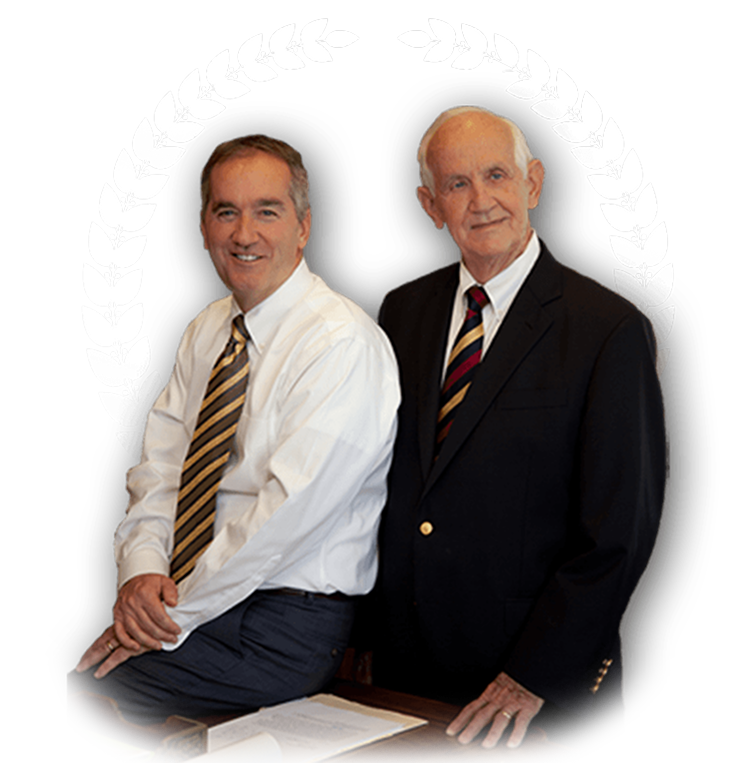
Ward & Ward Personal Injury Lawyers has been representing car accident victims on a plaintiff-only basis for decades. Charles P. Ward has practiced law since 1989 and has been recognized as a Super Lawyers honoree every year since 2005. He holds a Top 25 Trial Lawyers designation from the Motor Vehicle Trial Lawyers Association and has received the Lead Counsel Rated distinction. He also carries the AV Preeminent Peer Review Rating from Martindale-Hubbell, which is the highest rating available for legal ability and ethical standards.
Donald W. Ward has been licensed to practice in Indiana since 1954. A graduate of the University of Notre Dame School of Law, Don served as President of the Indiana Trial Lawyers Association and received the organization’s Lifetime Achievement Award. He was appointed to the Indiana Judicial Nominating and Qualifications Commission on three separate occasions and has been recognized with the Sagamore of the Wabash Award, one of the highest honors bestowed by the Governor of Indiana.
Together, our attorneys have helped clients across Indiana recover millions of dollars in car accident and personal injury cases. If you need a personal injury lawyer in Bloomington, IN, our firm has the record and the resources to handle your claim.
What Is Important to Understand About a Car Accident Case?
Damages, Liability, and Compensation for Car Accident Cases
Car accident victims in Indiana may be entitled to both economic and non-economic damages. Economic damages cover the measurable financial losses that result from the collision, while non-economic damages compensate for harm that does not carry a specific dollar figure.
Economic damages typically include medical bills, surgical costs, prescription medication, physical therapy and rehabilitation, lost wages, and diminished future earning capacity. Non-economic damages include physical pain, emotional distress, and loss of enjoyment of daily activities. In cases involving especially reckless or egregious conduct, such as drunk driving, Indiana law may also allow punitive damages, which are capped at the greater of three times compensatory damages or $50,000.
Liability in a car accident case is generally established through negligence. You must show that the other driver owed you a duty of care, breached that duty, and that the breach caused your injuries. Indiana’s comparative fault system then reduces your recovery by your percentage of fault.
What Are Important Aspects of a Car Accident Case?
Several factors can influence the outcome of a car accident claim in Bloomington. Understanding these early in the process gives your attorney the best chance of building a strong case.
- Evidence preservation. Physical evidence from the crash scene, including photographs, police reports, and witness contact information, begins to disappear quickly. An auto accident lawyer in Bloomington can help you gather the right evidence to support your claim.
- Medical documentation. A gap between the accident and your first medical visit gives the insurance company a reason to argue that your injuries are unrelated to the crash. Prompt and consistent treatment strengthens causation.
- Insurance carrier tactics. Adjusters may contact you quickly and offer a settlement before you understand the full extent of your injuries. Early settlements rarely account for long-term treatment needs or future lost income.
- Fault disputes. Under Indiana’s modified comparative fault rule, the insurance company has a strong incentive to assign as much fault to you as possible. Any statement you make, whether to the adjuster or on social media, can be used to increase your fault percentage.
What Is the Car Accident Case Timeline?
Every case is different, but most car accident claims in Bloomington, IN follow a general progression. Understanding the timeline helps manage expectations.
- Immediate aftermath (days 1 through 14). Seek medical attention, report the accident, and consult with a car accident attorney. Early investigation protects key evidence.
- Medical treatment (weeks to months). Continue all recommended treatment until your physician determines you have reached maximum medical improvement. Settling before that point often means leaving compensation on the table.
- Case investigation and demand. Your attorney compiles medical records, bills, wage documentation, and other evidence of damages. A demand letter is then sent to the at-fault party’s insurer.
- Negotiation. The insurance company responds to the demand, typically with a lower offer. Negotiations may go through several rounds. Most claims resolve during this stage.
- Litigation. If the insurer refuses to offer a fair settlement, your car wreck lawyer in Bloomington, IN will file a lawsuit. Indiana’s two-year statute of limitations under IC 34-11-2-4 sets the deadline for filing, beginning from the date of the accident.
What Should You Bring to Your Car Accident Consultation?
Bringing the right documents to your initial meeting allows the attorney to assess your claim more accurately from the outset. Gather what you can, but do not delay the consultation if some items are unavailable.
- The police accident report or crash report number
- Photographs of the vehicles, the scene, and your visible injuries
- Medical records and bills related to the accident
- Insurance policy information for all parties involved
- Any correspondence you have received from the other driver’s insurance company
Your initial consultation with Ward & Ward Personal Injury Lawyers is free and confidential. The attorney will review the facts of your case, explain how Indiana law applies, and discuss the options available to you.
What Are Important Indiana Legal Resources for Car Accident Cases?
Indiana law governs the rights and obligations of car accident victims. The following resources can help you understand the legal framework that applies to your claim.
- The Indiana General Assembly publishes the full text of Title 34, which covers civil law and procedure, including statutes on limitations and comparative fault.
- The Indiana State Police maintains the central repository of all crash reports filed in Indiana and provides access to individual reports.
- The Indiana BMV outlines insurance and financial responsibility requirements for all drivers involved in an accident.
- The NHTSA collects national motor vehicle crash data, including statistics on fatality rates, crash causes, and vehicle safety.
- The CDC Transportation Safety division publishes data on crash-related injuries and evidence-based prevention strategies.
Indiana imposes a two-year statute of limitations on personal injury claims under IC 34-11-2-4. The state follows a modified comparative fault rule under IC 34-51-2. If you are found more than 50% at fault for the collision, you are barred from recovering any damages. These deadlines and rules make early legal counsel important. If you need to prove fault in your case, an attorney familiar with Indiana’s negligence framework can help.
Reach Out to Ward & Ward Personal Injury Lawyers to Schedule a Consultation
Ward & Ward Personal Injury Lawyers represents car accident victims in Bloomington, IN, and throughout the state. If you have been injured, our attorneys will review the facts of your case, explain your legal options, and advise you on the best path forward. The initial consultation is free. Contact us to schedule a case evaluation with a Bloomington car accident attorney who has handled these matters for decades. We respond to consultation requests promptly.
Contact Us Today!


Free Consultation
Talk to an experienced injury attorney
Contact Our Office Today
728 S Meridian St, Indianapolis, IN 46225