

Bloomington Personal Injury Lawyer
Were you injured in a personal injury accident in Bloomington, IN? At Ward & Ward Personal Injury Lawyers, we provide dedicated personal injury representation grounded in decades of plaintiff-side trial work.
If you have been injured in Bloomington because of another person’s or company’s negligence, Indiana law allows you to seek compensation for the harm you have suffered. Ward & Ward Personal Injury Lawyers has represented injured clients across the state since 1954, when Donald W. Ward first began practicing law in Indiana. Our firm handles personal injury claims from the initial investigation through trial if necessary. Contact our Bloomington, IN personal injury lawyer to schedule a free case evaluation.
Personal Injury Lawyer Bloomington, IN
A personal injury claim arises when someone is hurt because another person or entity acted carelessly or recklessly. The injured party has the right to seek compensation for medical bills, lost income, physical pain, and other losses that resulted from the incident. These claims are civil matters, separate from any criminal charges that may arise from the same conduct.
In Indiana, personal injury cases are governed by a modified comparative fault rule under IC 34-51-2. If you share some responsibility for the accident, your compensation is reduced by your percentage of fault. If your fault exceeds 50%, you are barred from recovery entirely. That threshold makes the way fault is investigated and presented a central issue in every case.
Types of Personal Injury Cases We Handle in Bloomington
The category of “personal injury” covers a wide range of situations. What connects them is a common legal question: did someone else’s negligence cause your injuries? Ward & Ward Personal Injury Lawyers represents clients in Bloomington across the following case types.
- Car accidents. Car crashes remain the most common source of personal injury claims in Indiana. Even a collision at moderate speed can produce herniated discs, broken bones, and concussions that take months to resolve. Adjusters move fast after a crash. So should your attorney.
- Truck accidents. Commercial trucking cases involve federal regulations, corporate defendants, and injuries that tend to be severe. A loaded tractor-trailer outweighs a passenger car by a factor of 20 or more. The investigation in these cases starts with driver logs, inspection records, and cargo documentation.
- Motorcycle accidents. Insurance carriers regularly try to minimize motorcycle claims by arguing the rider assumed the risk. That argument doesn’t hold up when the evidence shows a driver failed to yield, turned left across a rider’s path, or changed lanes without checking a mirror.
- Bicycle accidents. Bloomington’s roads carry a mix of vehicle and bicycle traffic, particularly near Indiana University’s campus. When a motorist strikes a cyclist, the injuries are rarely minor. Indiana law requires vehicles to maintain safe clearance when passing a bicycle, and a violation of that duty establishes negligence.
- Pedestrian accidents. A pedestrian hit by a vehicle absorbs the full force of the collision. Fractures, traumatic brain injuries, and spinal cord damage are typical. Building the case depends on crosswalk evidence, traffic camera footage, and accident reconstruction.
- Dog bites. Indiana holds dog owners liable when their animal injures someone under certain circumstances. The claim can cover medical treatment, scarring, and the psychological effects of an attack, particularly when the victim is a child.
- Wrongful death. When negligence results in a fatality, Indiana’s wrongful death statute allows surviving family members to bring a civil claim. Recoverable damages include burial expenses, lost future earnings, and loss of companionship.
- Premises liability. Property owners in Indiana owe a duty of care to people lawfully on their land. Slip-and-fall injuries, inadequate security, and hazardous conditions on commercial property all fall within this practice area.
- Medical malpractice. When a healthcare provider’s care falls below the accepted standard and causes harm, the patient may have a malpractice claim. Indiana requires these claims to go through a medical review panel before a lawsuit can be filed.
Why Choose Ward & Ward Personal Injury Lawyers as My Personal Injury Lawyer in Bloomington, IN?
A Record Built Over Seven Decades of Plaintiff-Side Practice
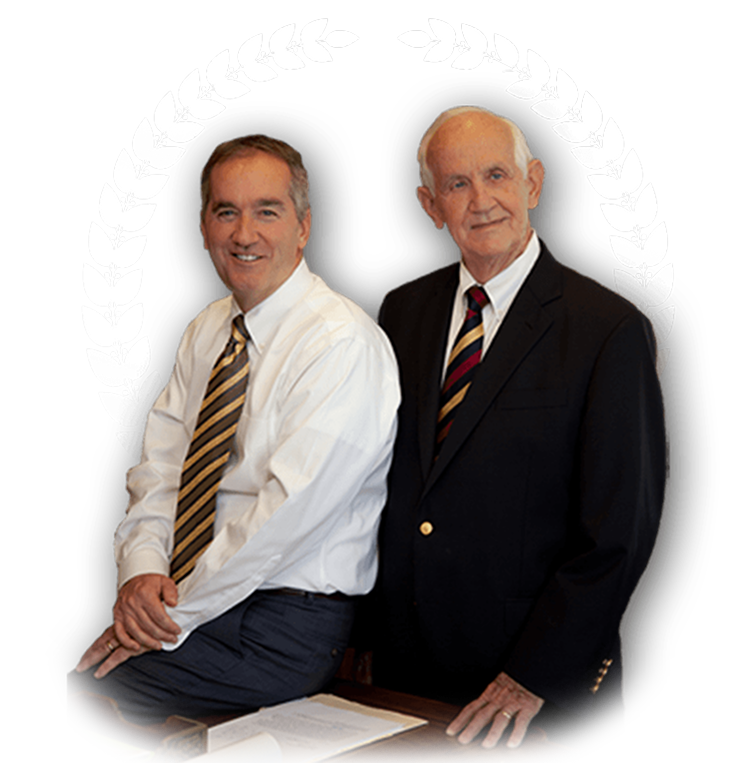
Donald W. Ward began practicing law in Indiana in 1954 after earning his J.D. from the University of Notre Dame. He served as Deputy Trial Prosecutor for Marion County and later as Deputy Corporation Counsel for the City of Indianapolis before dedicating his career to representing injured plaintiffs. Don is a Fellow of the Indiana College of Trial Lawyers and has been a member of the American Association for Justice since 1958. In 2015, the Indiana Bar Foundation recognized him with its Legendary Lawyer Award, an honor given to attorneys whose careers have left a lasting impact on the legal profession in Indiana.
Charles P. Ward earned his J.D. from Indiana University in 1989, graduating after a clerkship with Justice Richard M. Givan at the Indiana Supreme Court. He holds a Best Lawyers in America designation in Personal Injury Litigation, an Avvo Top Personal Injury Attorney rating, and has been recognized in the U.S. News & World Report ranking of Best Law Firms. Charlie is also a member of the Indianapolis Inn of Court.
The firm has recovered millions of dollars for personal injury clients throughout Indiana. That record reflects what we bring to every case: thorough investigation, direct communication, and a willingness to take the matter to trial when the insurance company’s offer does not reflect the full value of the claim.
What Is Important to Understand About a Personal Injury Case?
Damages, Liability, and Compensation for Personal Injury Cases
Indiana personal injury law recognizes two broad categories of damages. Economic damages compensate for losses you can document with receipts, invoices, and records: hospital bills, surgical costs, prescription expenses, physical therapy, and wages lost during recovery. If your injuries limit your ability to earn what you earned before the accident, future lost earning capacity is also recoverable.
Non-economic damages cover harm that doesn’t appear on a bill. Physical pain, emotional distress, loss of enjoyment of life, and the strain an injury places on personal relationships all fall into this category. Indiana does not cap non-economic damages in most personal injury cases, though medical malpractice claims are subject to separate limits under the Indiana Medical Malpractice Act.
Liability centers on negligence. You must establish that the defendant owed you a duty of care, breached it, and that the breach caused your injury and resulting damages. Indiana’s comparative fault rule then adjusts recovery based on each party’s share of responsibility.
What Are Important Aspects of a Personal Injury Case?
The outcome of a personal injury case often depends on decisions made in the first days and weeks after the injury.
- Timing of medical treatment. Gaps between the accident and your first medical visit give the insurer grounds to argue that your injuries were not caused by the incident, or that they are less serious than claimed. Consistent treatment records support both causation and the value of the claim.
- Preservation of evidence. Accident scenes change quickly. Skid marks wash away, surveillance footage gets overwritten, and witnesses become harder to locate. An injury attorney in Bloomington, IN can begin the preservation process immediately.
- Communication with insurers. Adjusters contact injured people quickly. Their goal is to close the file for as little as possible. Recorded statements and early settlement offers are tools designed to limit what the company pays.
- Statute of limitations. Indiana’s two-year filing deadline under IC 34-11-2-4 begins on the date of the injury. Missing it extinguishes the claim regardless of how strong the evidence may be.
What Is the Personal Injury Case Timeline?
Personal injury cases do not follow a single schedule. The nature of the injury, the number of parties involved, and the willingness of the insurance company to negotiate all affect duration. That said, a general sequence applies to most claims.
- Medical stabilization. No case should be settled before the injured person reaches maximum medical improvement. Settling too early risks leaving long-term treatment costs and future limitations uncompensated.
- Investigation and documentation. The attorney gathers medical records, bills, employment documentation, and any evidence of fault. In some cases, accident reconstruction or consultation with medical professionals is necessary.
- Demand and negotiation. A demand package is submitted to the insurance carrier. The insurer responds, typically with a lower figure. Negotiation continues until the parties reach an agreement or reach an impasse.
- Litigation. If settlement talks fail, the attorney files a lawsuit. Discovery, depositions, and potentially trial follow. Most personal injury cases settle before reaching a jury, but the willingness to go to trial often affects the quality of the settlement offer.
What Should You Bring to Your Personal Injury Consultation?
Having the right information at the initial meeting lets the attorney evaluate the case more efficiently. Not all of these will be available in every situation, but gather what you can.
- Any police, incident, or accident reports
- Medical records, bills, and imaging results
- Documentation of wages or income lost since the injury
- Photographs of the scene, property damage, and visible injuries
- Correspondence from any insurance company involved
Your consultation with Ward & Ward Personal Injury Lawyers is free and confidential. The attorney will review the facts, explain how Indiana law applies to your situation, and outline the options available to you.
What Are Important Indiana Legal Resources for Personal Injury Cases?
Indiana law establishes the framework for all personal injury claims filed in the state. These resources can help you understand the rules that apply to your case.
- The Indiana General Assembly publishes the full text of Title 34, covering civil law procedures, statutes of limitation, and the Comparative Fault Act.
- The Indiana State Police maintains the central repository of all crash reports filed statewide and provides access to individual reports.
- The Indiana BMV explains minimum insurance requirements and the financial responsibility process for drivers involved in accidents.
- The NHTSA publishes national motor vehicle crash data, including fatality statistics and crash-cause analysis.
- The CDC Transportation Safety division tracks injury data and publishes evidence-based strategies for crash prevention.
Indiana imposes a two-year statute of limitations on personal injury claims under IC 34-11-2-4, measured from the date of injury. The state’s modified comparative fault rule under IC 34-51-2 bars recovery if the injured person’s fault exceeds 50%. An attorney who understands these rules and how they apply to a strong personal injury case can advise you on your options.
Reach Out to Ward & Ward Personal Injury Lawyers to Schedule a Consultation
Ward & Ward Personal Injury Lawyers represents injured clients in Bloomington, IN, and throughout the state of Indiana. If you or a family member has been harmed by someone else’s negligence, our attorneys will review the facts and explain your legal options during a free, confidential consultation. Contact us to schedule a meeting with a Bloomington personal injury attorney today.
Personal Injury Statistics in Bloomington
 Monroe County keeps its own crash records, and they show where injuries in the Bloomington area actually happen. The Monroe County Highway Department’s traffic crash summary covers the more than 700 miles of county-maintained roads outside the city’s street network, and the City of Bloomington’s crash dashboard covers vehicle, bicycle, and pedestrian collisions countywide. Both draw on the same police reports filed through the Indiana State Police.
The numbers matter to a Bloomington personal injury lawyer for a practical reason. Insurers evaluate a claim against what typically happens on a given road at a given hour, and a client whose crash fits a documented pattern has an easier time proving the other driver’s negligence.
- County roads recorded 1,172 crashes from January 2021 through December 2023, and 242 of them, 20.7 percent, caused a personal injury. Nine people died.
- Sixty-nine of those crashes involved a driver suspected of alcohol or drug impairment, with the 6:01 p.m. to 9:00 p.m. window producing the highest average.
- Crashes on county roads peaked during the afternoon commute, from 3:01 p.m. to 6:00 p.m., in each of the three years.
- Across the county, 329 pedestrians and 219 bicyclists were involved in crashes between 2019 and 2024.
- Statewide, Indiana crash data for 2024 shows 200,035 collisions and 872 deaths, with hit-and-run drivers involved in 13 percent of all crashes.
Types of Evidence Used in Bloomington Personal Injury Cases
A personal injury attorney in Bloomington, IN builds a case based on indisputable evidence. The list below covers the categories that decide most claims.
- The crash or incident report. The officer’s report records the location, the vehicles, the witnesses, and often a preliminary opinion on fault. A police report is not the last word on liability, but adjusters read it first.
- Photographs and videos. Images of the scene, the vehicles, the hazard, and your injuries taken on the day of the incident carry more weight than anything reconstructed later. Traffic cameras, business security systems, and dashboard cameras overwrite footage within days, so a preservation letter goes out immediately.
- Witness statements. Independent witnesses, people with no stake in the outcome, are the most persuasive evidence of how a collision happened. The importance of witnesses grows when the other driver changes their story after speaking with their insurer.
- Medical records and bills. Emergency room notes, imaging, specialist visits, and physical therapy records prove both the injury and its cause. The way medical treatment affects a claim is direct: consistent care documents a real injury, and gaps invite doubt.
- Vehicle data. Most vehicles built in the last decade store speed, braking, and throttle data in an event data recorder. Black box technology can settle a dispute over who was speeding or who braked first, but the data must be downloaded before the vehicle is repaired or sold.
- Employment and wage records. Pay stubs, a letter from your employer, and tax returns establish lost income. For a self-employed client, invoices and prior-year returns fill that role.
- Physician and reconstruction testimony. Treating doctors explain the injury and its future course. Accident reconstruction specialists explain physics, sight lines, and reaction time when the parties dispute how the crash occurred.
- Property and maintenance records. A fall on a business’s floor, a crash at a poorly signed county intersection, or an injury on a city sidewalk raises questions about inspection and repair history. Claims involving a public road or building follow the separate notice rules for governmental tort claims, which are shorter than the general filing deadline.
- Insurance policies. The at-fault party’s policy sets the ceiling on what their insurer will pay. Your own uninsured and underinsured coverage may be the only source of full compensation when that ceiling is low.
Bloomington Personal Injury Lawyer FAQs
How much does a personal injury lawyer in Bloomington cost?
Ward & Ward Personal Injury Lawyers handles injury cases on a contingency basis. You pay nothing up front, and our fee is a percentage of the recovery. If the case produces no recovery, you owe no attorney fee. The initial consultation is free.
Can I still recover if I was partly at fault?
Yes, as long as your share of the fault is 50 percent or less. Indiana reduces your compensation by your percentage of fault, and you can still recover compensation while partly at fault. A finding of 51 percent or more bars recovery.
Do I have to go to court?
Most claims settle without a lawsuit, and many lawsuits settle before trial. Whether you must go to court depends on the insurer’s offer. We prepare every case as if it will be tried, because that preparation is what produces a fair offer.
I am an IU student from another state. Can I file a claim in Indiana?
Yes. A claim is filed where the injury occurred, not where you live. Students who were injured while visiting Indiana can pursue the claim from home, and we handle the Indiana proceedings.
Who pays my medical bills before the case settles?
Your health insurance, medical payments coverage on your auto policy, or a provider willing to wait for settlement. How you pay medical bills in the meantime is one of the first things we sort out.
Can a passenger file a claim?
Yes. A passenger is rarely at fault and can bring a claim against any driver whose negligence caused the crash, including the driver of the car they were riding in. Passengers in Indiana also have access to their own policy’s coverage.
What happens if the insurance company denies my claim?
A denial is a negotiating position, not a final decision. When an insurer denies a claim, we request the basis in writing, supply the evidence that answers it, and file suit if the denial stands.
Is a personal injury settlement taxable?
Compensation for physical injuries is generally not taxable income, though portions attributed to lost wages or interest can be. Whether taxes are owed depends on how the settlement is structured, and we address that before you sign.
How long do I have to file?
Two years from the date of injury for most claims, under Indiana Code 34-11-2-4. Claims against a city, county, or state university require written notice much sooner.
Where is your office, and do you meet Bloomington clients?
Our office is at 728 South Meridian Street in Indianapolis, and we represent clients throughout Indiana. A Bloomington, IN personal injury attorney from our firm can meet by phone or video, and our phones are answered 24 hours a day.
Important Resources for Bloomington Personal Injury Cases
Most Dangerous Locations and Intersections for Personal Injury in Bloomington
On county-maintained roads, the Monroe County Highway Department’s 2021–2023 summary recorded the most crashes on Old State Road 37 South, Curry Pike, and Fairfax Road, and the most intersection crashes at Curry Pike and Vernal Pike, Curry Pike and Woodyard Road, and Fairfax Road and Schacht Road. Ison Road South, Garrison Chapel Road, and Matthews Drive had the highest crash rates once traffic volume was considered.
Inside the city, the crash dashboard ranks East and West Third Street and South Walnut Street as the streets with the most pedestrian collisions. The crosswalk at 17th Street and Eagleson Avenue, where students were struck in both 2024 and 2025, illustrates the crosswalk safety concerns around campus. A Bloomington crosswalk accident lawyer from our firm handles those claims, along with cases involving hit-and-run pedestrian injuries.
What Are Important Local Resources for Bloomington Personal Injury Cases?
The organizations below are the ones an injured person in Bloomington contacts most often in the first days after an incident.
- IU Health Bloomington Hospital, 2651 E. Discovery Parkway, provides emergency and trauma care. 812-353-5252.
- Bloomington Police Department, 220 E. Third Street, investigates crashes inside city limits and maintains the resulting reports. 812-339-4477.
- The City of Bloomington explains how to file an accident report and when a report is required.
- The Bloomington Crash Hub publishes the county’s crash data and the city’s priority corridor maps.
Ward & Ward Personal Injury Lawyers does not endorse these organizations, and no organization listed here endorses our firm. They are provided for informational purposes only.
About Ward & Ward Personal Injury Lawyers
Charles P. Ward has been selected to Super Lawyers every year since 2005, holds the AV Preeminent rating from Martindale-Hubbell, and was named to the Top 25 Motor Vehicle Trial Lawyers by the Motor Vehicle Trial Lawyers Association after graduating cum laude from Butler University. Donald W. Ward served as President of the Indiana Trial Lawyers Association from 1978 to 1979 and received the Sagamore of the Wabash, an honor conferred by the Governor of Indiana, in 2005. Every injury case at our firm is accepted on a contingency basis with a free initial consultation.
What Our Clients Say
★★★★★
“I highly recommend Ward & Ward for anyone in need of strong, professional legal representation. They defended me when I had a slip and fall accident and my daughter when she was attacked by a dog. They handled everything with confidence and care from start to finish in both cases. I was supported and kept informed throughout the entire process and all options were explained clearly. They were truly committed to protecting my interests. If you want an attorney who is experienced, trustworthy and effective, I would not hesitate to call Ward & Ward.” – Kimberly May
Read more reviews on our Google Business Profile.
Additional Resources for Bloomington Personal Injury Cases
- Why Comparative Fault Shapes Every Case
- The Panel You Must Face Before a Judge
- Common Questions Local Victims Ask
- Why the Filing Clock Starts So Early
- Why Crosswalks Do Not Guarantee Safety
Contact Ward & Ward Personal Injury Lawyers
If a driver, a property owner, or a medical provider in Bloomington caused your injury, the evidence that proves it is easiest to gather early. A Bloomington personal injury attorney from our firm will review the facts at no charge, tell you whether the claim is worth pursuing, and explain what the recovery could include. Our fee is contingent on that recovery, and our phones are answered 24 hours a day. Contact us to schedule a free consultation with Ward & Ward Personal Injury Lawyers.
Contact Us Today!


Free Consultation
Talk to an experienced injury attorney
Contact Our Office Today
728 S Meridian St, Indianapolis, IN 46225