

Bloomington Wrongful Death Lawyer
Was a loved one killed in a wrongful death accident in Bloomington, IN? At Ward & Ward Personal Injury Lawyers, we are trusted wrongful death lawyers serving clients across Bloomington, IN, and the surrounding area.
If your family has lost someone because of another party’s negligence, Indiana law provides a path to hold that party accountable through a civil wrongful death claim. These cases involve procedural rules, filing requirements, and categories of recoverable damages. Ward & Ward Personal Injury Lawyers has represented families in wrongful death matters across Indiana for more than seven decades. Our attorneys handle every aspect of the claim so that families can focus on what matters most. Contact our Bloomington, IN wrongful death lawyer for a free and confidential case evaluation.
Wrongful Death Lawyer Bloomington, IN
A wrongful death claim arises when a person dies as a result of another party’s negligent, reckless, or intentional conduct. Under Indiana Code 34-23-1, the personal representative of the deceased person’s estate files the lawsuit on behalf of surviving family members. The compensation recovered is distributed to the surviving spouse, dependent children, or dependent next of kin.
Indiana imposes a strict two-year statute of limitations on wrongful death claims, running from the date of death. A wrongful death attorney in Bloomington, IN, who begins work early can ensure the estate is opened, the personal representative is appointed, and the investigation proceeds within the required timeframe.
Types of Wrongful Death Cases We Handle in Bloomington
A fatal accident can result from many different types of negligence. The cause of death determines how the investigation is conducted, which parties may be liable, and what evidence the case requires. Ward & Ward Personal Injury Lawyers represents families in Bloomington across the following categories of wrongful death cases.
- Car accidents. Fatal car crashes are among the leading causes of wrongful death claims in Indiana. A driver who runs a red light, operates a vehicle while impaired, or causes a high-speed collision may be liable for the resulting death. The investigation relies on police reports, witness testimony, and physical evidence from the scene.
- Truck accidents. The sheer mass of a commercial truck makes fatal outcomes far more likely in collisions with passenger vehicles. Wrongful death claims against trucking companies often involve multiple defendants: the driver, the carrier, the cargo loader, and sometimes the vehicle manufacturer.
- Motorcycle accidents. Motorcyclists lack the structural protection that cars provide. A collision that might cause moderate injuries in a passenger vehicle can be fatal for a rider. Proving liability in a fatal motorcycle case requires the same focus on driver negligence and evidence preservation that applies to any motor vehicle death.
- Pedestrian accidents. A pedestrian struck by a vehicle absorbs the full impact. Fatal outcomes are common, particularly in crashes involving higher speeds. Crosswalk evidence, traffic signals, and camera footage are critical in establishing who was at fault.
- Bicycle accidents. Cyclists on Bloomington’s roads face risks from drivers who fail to yield, pass too closely, or open car doors into a rider’s path. When a bicycle-vehicle collision is fatal, the wrongful death claim follows the same framework as other motor vehicle cases.
- Medical malpractice. When a healthcare provider’s negligence causes a patient’s death, the family may have a wrongful death claim. Indiana requires medical malpractice cases to go through a review panel before a lawsuit can be filed.
- Premises liability. Property owners who fail to maintain safe conditions may be liable when that failure results in a death. Fatal falls, inadequate security, and structural failures all fall within this category.
- Workplace accidents. Construction site fatalities, industrial equipment failures, and exposure to hazardous materials can give rise to wrongful death claims against parties other than the employer. These cases often involve third-party contractors, equipment manufacturers, or property owners.
Why Choose Ward & Ward Personal Injury Lawyers as My Wrongful Death Lawyer in Bloomington, IN?
Seven Decades Representing Families in Serious-Injury and Fatal Cases
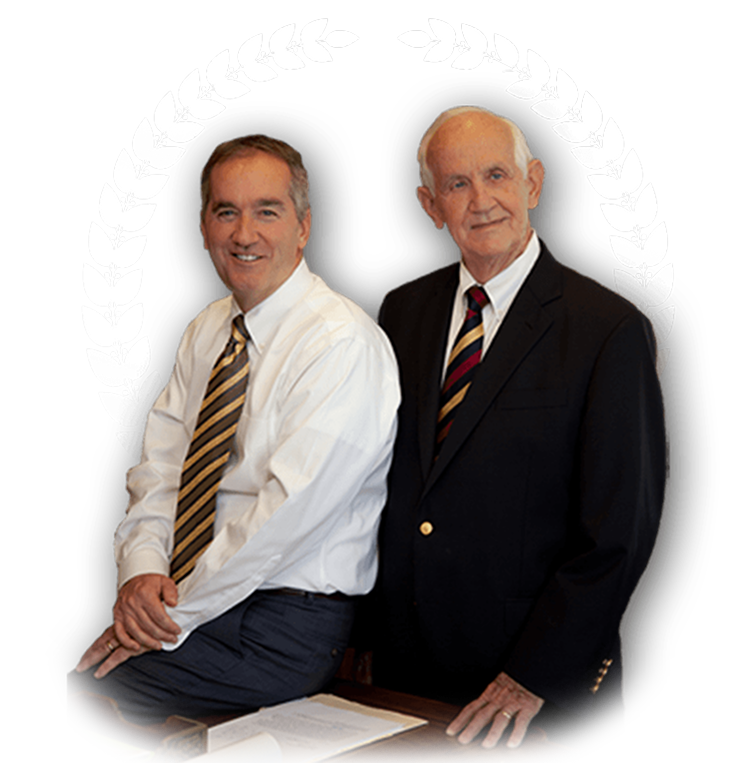
Donald W. Ward has been licensed to practice in Indiana since 1954. He served as Vice-President of the Indianapolis Bar Association and received the Service Award from the Board of Governors of the Association of Trial Lawyers of America for his sustained commitment to plaintiff advocacy. Don is a Fellow of the Indiana College of Trial Lawyers and was named to the U.S. News & World Report Best Law Firms ranking.
Charles P. Ward has practiced since 1989 and holds the Lead Counsel Rated distinction, a peer-reviewed credential recognizing trial attorneys who meet heightened standards for experience and ethical conduct. He is a Best Lawyers honoree in Personal Injury Litigation and a member of the Indiana Trial Lawyers Association.
The firm has recovered millions of dollars for families across Indiana in wrongful death and serious-injury cases. If you need a personal injury lawyer in Bloomington, IN, our attorneys can evaluate whether a wrongful death claim is available in your situation.
Understanding Wrongful Death Cases
Damages, Liability, and Compensation for Wrongful Death Cases
Indiana’s wrongful death statute allows the personal representative to recover several categories of damages on behalf of surviving family members. These include medical expenses incurred before the death, funeral and burial costs, and lost earnings the deceased would have provided. The statute also allows recovery for loss of love and companionship, which compensates family members for the relational harm caused by the death.
Liability is established through the same negligence framework that applies to all Indiana personal injury cases. The claimant must prove that the defendant owed a duty of care to the deceased, that the defendant breached that duty, and that the breach caused the death. Indiana’s comparative fault rule under IC 34-51-2 applies: if the deceased person’s own fault exceeds 50%, the claim is barred. Any lesser share of fault reduces the recovery proportionally.
What Are Important Aspects of a Wrongful Death Case?
Wrongful death claims involve procedural and evidentiary requirements that differ from standard personal injury cases. Understanding them early can shape the outcome.
- Personal representative requirement. Indiana law requires the personal representative of the estate to file the wrongful death lawsuit. This means the estate must be opened through probate court, and a representative must be appointed. Families should begin this process well before the filing deadline approaches.
- Identifying all liable parties. Fatal accidents can involve multiple defendants. A car crash might implicate a negligent driver and a bar that overserved them. A workplace death might involve a contractor, an equipment manufacturer, and a property owner. The investigation determines who bears responsibility.
- Preservation of evidence. Physical evidence, surveillance footage, maintenance records, and electronic data all deteriorate or get destroyed over time. Early attorney involvement is critical for sending preservation demands and beginning the investigation before key evidence disappears.
- Distinguishing wrongful death from survival actions. Indiana recognizes both types of claims. A wrongful death claim compensates the surviving family. A survival action compensates the estate for the deceased person’s pain and suffering before death. Both may apply, and both carry their own rules.
What Is the Wrongful Death Case Timeline?
Wrongful death cases tend to move more slowly than other personal injury claims. The emotional complexity, the number of parties involved, and the procedural steps required all contribute to a longer timeline.
- Estate administration. Before the lawsuit can be filed, the estate must be opened in probate court and a personal representative appointed. This step can take weeks and should begin as early as possible.
- Investigation. The attorney gathers medical records, police reports, autopsy results, witness statements, and any physical or electronic evidence. In cases involving commercial vehicles or workplaces, regulatory records and safety compliance documentation may also be relevant.
- Demand and negotiation. After the investigation is complete, the attorney submits a demand to the defendant’s insurance carrier. Wrongful death demands often involve substantial figures, and insurers contest them accordingly. Negotiation can take months.
- Litigation. If a settlement is not reached, the attorney files suit. Indiana’s two-year statute of limitations under the wrongful death statute sets the deadline. Discovery, depositions, and trial preparation follow.
What Should You Bring to Your Wrongful Death Consultation?
The initial meeting with the attorney is an opportunity to discuss the circumstances of the death and determine whether a claim exists. Bring what documentation you have available.
- The death certificate and any autopsy or medical examiner reports
- Medical records and bills from treatment before the death
- Police or incident reports related to the fatal event
- Information about the deceased person’s income and employment
- Any correspondence from insurance companies or other parties
Your consultation with Ward & Ward Personal Injury Lawyers is free. The attorney will explain how Indiana’s wrongful death law applies to your family’s situation and outline the steps involved in pursuing a claim.
What Are Important Indiana Legal Resources for Wrongful Death Cases?
Indiana’s wrongful death statutes establish who may file a claim, what damages are recoverable, and the deadlines that apply. These resources provide access to the relevant legal framework.
- The Indiana General Assembly publishes Title 34, which includes the wrongful death statutes under Article 23 as well as the Comparative Fault Act and statutes of limitation.
- The Indiana State Police maintains the state’s central repository of crash reports, which are frequently relevant in fatal motor vehicle cases.
- The NHTSA collects national crash fatality data, including statistics on deaths involving passenger vehicles, commercial trucks, motorcycles, and pedestrians.
- The Indiana BMV outlines insurance requirements and financial responsibility obligations for Indiana drivers involved in accidents.
- The CDC Transportation Safety division publishes data on crash-related fatalities and evidence-based prevention strategies.
Indiana’s wrongful death statute requires that the claim be filed within two years of the date of death. The state’s comparative fault rule under IC 34-51-2 applies, barring recovery if the deceased person’s fault exceeds 50%. Because of the procedural requirements involved in these cases, including opening the estate and appointing a personal representative, families should consult with an attorney as early as possible after their loss.
Reach Out to Ward & Ward Personal Injury Lawyers to Schedule a Consultation
Ward & Ward Personal Injury Lawyers represents families pursuing wrongful death claims in Bloomington, IN, and throughout Indiana. If you have lost a loved one because of another party’s negligence, our attorneys will review the circumstances, explain your family’s legal options, and help you understand the process. Contact us today to schedule a free consultation.
Wrongful Death Statistics in Bloomington, IN
 Indiana recorded 928 traffic deaths in 2023, a rate of 13.5 per 100,000 residents, according to the Indiana Criminal Justice Institute. County roads produced the highest fatal collision rate of any road class in the state, and more than half of all traffic fatalities happened outside urban areas, even though those areas account for less than a third of crashes. Monroe County’s mix of city streets, state highways, and rural county roads fits that pattern.
Traffic deaths are only one source of wrongful death claims in Bloomington. Falls, workplace incidents, medical errors, and fires also take lives each year. But crash data is the most complete public record available.
- County roads carried 8.5 fatal collisions per 1,000 crashes in 2023, compared with 3.4 on local and city streets, per ICJI crash research.
- Head-on collisions produced 21.1 fatal crashes per 1,000, nearly five times the statewide average across all collision types.
- Nine fatal crashes occurred on Monroe County-maintained roads between 2021 and 2023, according to the Monroe County Highway Department.
- Pedestrians and cyclists were less than 1% of people involved in Indiana crashes in 2023 but 15% of those killed.
- Seventy Indiana traffic deaths in 2023 involved a driver impaired by alcohol.
Types of Evidence Used in Wrongful Death Cases
A wrongful death claim in Bloomington is built on records that are often held by agencies or businesses that will not preserve them without a formal request.
- The police crash or incident report. Officers document the scene, road conditions, statements from drivers and bystanders, and any citations issued. For fatal crashes, a reconstruction unit may measure skid marks, debris fields, and final resting positions.
- The coroner’s report and autopsy. The Monroe County Coroner determines cause and manner of death. The autopsy and toxicology results confirm the cause of death and rule out contributing medical conditions the defense might raise.
- Medical records from treatment before death. Emergency room charts, surgical notes, and ICU records document the injuries, the treatment attempted, and the pain the person experienced.
- Vehicle event data. Most passenger vehicles built in the last 15 years store speed, braking, throttle, and seat belt data from the seconds before impact. Black box data is overwritten or lost once a vehicle is repaired or scrapped, which is why a preservation letter goes out immediately.
- Witness accounts. Independent witness statements taken within days carry more weight than statements taken months later.
- Video. Traffic cameras, business surveillance, doorbell cameras, and dashcams often capture the moments before a collision, and most systems overwrite footage within days.
- Cell phone records. When distraction is suspected, the at-fault driver’s phone records show whether a call or text was in progress at the time of the crash. These require a subpoena.
- Employment and financial records. Pay stubs, tax returns, benefits statements, and work history establish the income and household services the person would have provided over a working lifetime.
- Records from businesses that share fault. Bar receipts and server training logs matter when a drunk driver was overserved. Maintenance logs and driver qualification files matter when a commercial truck is involved.
- Testimony from family. The relationship between the deceased and the surviving spouse, children, or parents is proven through the people who lived it, and that testimony supports the loss of love and companionship damages.
Bloomington Wrongful Death Lawyer FAQs
How much does a wrongful death lawyer in Bloomington cost?
Ward & Ward Personal Injury Lawyers handles wrongful death cases on a contingency basis. The family pays nothing up front and no hourly fees. Our fee comes out of the recovery, and if there is no recovery, there is no fee. The percentage is set in writing before any work begins.
Who is allowed to bring the claim?
In Indiana, the personal representative of the estate files the lawsuit, not the family members individually. If the deceased left a will naming an executor, that person usually serves. If not, the probate court appoints someone, often the surviving spouse or an adult child. Our attorneys handle the paperwork to file the claim in the correct capacity.
How long does the family have to file?
Two years from the date of death. That date controls even when the person survived the accident for weeks or months before passing. Indiana’s wrongful death statute sits in Title 34, Article 23 of the Indiana Code. The estate must be opened before a suit can be filed, so the practical deadline is earlier.
What can our family recover?
The recoverable damages fall into two groups. The first covers measurable costs: medical bills from the final illness or injury, funeral and burial expenses, and the income and services the person would have provided. The second covers loss of love, care, and companionship. Which family members share in the recovery depends on who survived.
What is a survival action, and is it different from a wrongful death claim?
A wrongful death claim compensates the family for their loss. A survival action belongs to the estate and compensates for what the deceased person experienced before death, including conscious pain and suffering. When someone survives an accident for a period of time before dying, both claims may be available, and a Bloomington wrongful death attorney will evaluate each separately.
Does Indiana treat the death of a child differently?
Yes. Indiana has a separate child wrongful death statute, and it changes who may bring the claim and what losses are recognized. Parents, rather than a personal representative, are typically the ones who file. The categories of recoverable damages also differ from those available in an adult’s death.
What if our loved one was partly at fault?
The claim survives as long as the deceased person’s share of fault is 50% or less. The recovery is reduced by that percentage. Insurers assign fault aggressively in fatal cases because the person who could dispute their version is gone, which makes independent evidence essential.
The driver is facing criminal charges. Does that resolve our claim?
No. The criminal case is brought by the Monroe County Prosecutor and punishes the driver. The civil wrongful death claim compensates the family and proceeds separately, with a lower burden of proof. A conviction helps, but it is not required. An acquittal does not end the civil case either.
How long does a wrongful death case take in Bloomington, IN?
Longer than most injury claims. Opening the estate, obtaining the coroner’s findings, and gathering financial records take months before a demand can be made. Settled cases typically resolve within one to two years. Cases that go to trial in Monroe County take longer, and we prepare every case on the assumption that it might.
Will our family have to testify?
Possibly. If the case goes to trial, family members may testify about the relationship they lost and how the death changed their lives. Most cases resolve before trial, though a deposition may still be required. We prepare clients for every step.
Important Resources for Bloomington Wrongful Death Cases
Most Dangerous Locations for Fatal Accidents in Bloomington
County roads had the highest fatal crash rate in Indiana in 2023, followed by U.S. routes and state roads, while city streets had the lowest despite carrying more than half of all collisions. Speed, two-lane design, and the lack of median barriers explain the difference.
Around Bloomington, that means the highway corridors ringing the city: Interstate 69, State Road 46 toward Ellettsville and Nashville, State Road 45, and State Road 48. The county highway department’s summary maps the nine fatal crashes on county-maintained roads between 2021 and 2023 to rural segments rather than intersections. In town, pedestrians face the greatest risk on multi-lane arterials such as College Avenue and Walnut Street, and a fatal pedestrian crash is handled by the same wrongful death attorney in Bloomington, IN as any other fatal negligence case.
What Are Important Local Resources for Bloomington Wrongful Death Cases?
Families pursuing a wrongful death claim in Bloomington will need documents from the county and state offices below.
- Monroe County Coroner’s Office, 812-349-3222, determines cause and manner of death and releases autopsy and toxicology findings.
- Monroe County Clerk, 812-349-2614, accepts the filings needed to open an estate and appoint a personal representative.
- Monroe County Health Department, Vital Records Division, 812-349-2542, issues certified death certificates for deaths that occurred in the county.
- Indiana Department of Health, Division of Vital Records, issues certified copies of death records for deaths anywhere in Indiana.
These agencies are independent of Ward & Ward Personal Injury Lawyers. We do not endorse them, and their inclusion here is for information only.
About Ward & Ward Personal Injury Lawyers
Both of our attorneys hold the AV Preeminent rating from Martindale-Hubbell, the highest peer-review rating for legal ability and ethics. Donald W. Ward earned his law degree from the University of Notre Dame in 1954 after graduating from Hanover College and was appointed to the Indiana Judicial Nominating and Qualifications Commission during three separate terms. Charles P. Ward has been selected to Super Lawyers every year since 2005, holds a Top 25 Trial Lawyers designation from the Motor Vehicle Trial Lawyers Association, and is a member of the Indianapolis Inn of Court.
What Our Clients Say
★★★★★
“The care, and trust I have for these men make them more like family. They have been by my side since I was in an accident at 15 years old. I’m 48 and have lost both my parents. I would feel much worse if I didn’t know I had them in my corner. Forever grateful!”
Tyneka Sperry
Read more reviews on our Google Business Profile.
Additional Resources for Bloomington Wrongful Death Cases
- What Is Wrongful Death?
- Getting the Right Legal Help for Your Wrongful Death Claim
- Indiana Adult Wrongful Death Statute
- Wrongful Death Myths
- Your Rights After a Tragedy
Contact Ward & Ward Personal Injury Lawyers
When a family in Bloomington, IN loses someone to another person’s negligence, a wrongful death lawyer at our firm can determine whether a claim exists and handle the estate and investigation work that follows. We represent families on a contingency basis, so there is no fee unless we recover compensation. The consultation is free and confidential. You will meet with a Bloomington, IN wrongful death attorney who will review the circumstances of the death and explain your family’s options. Our office answers calls around the clock. Contact us when your family is ready.
Contact Us Today!


Free Consultation
Talk to an experienced injury attorney
Contact Our Office Today
728 S Meridian St, Indianapolis, IN 46225