

Bloomington Motorcycle Accident Lawyer
Were you injured in a motorcycle accident in Bloomington, IN? At Ward & Ward Personal Injury Lawyers, we are motorcycle accident lawyers who pursue full recovery for injured clients and their families.
If you have been injured in a motorcycle accident in Bloomington, the insurance process that follows is rarely straightforward. Adjusters handling motorcycle claims routinely apply a bias against the rider, and the injuries tend to be severe enough that early settlement offers rarely reflect the true cost of recovery. Ward & Ward Personal Injury Lawyers has represented motorcycle accident victims across Indiana for decades, and our attorneys know how to counter the tactics insurers use to reduce or deny these claims. Contact our Bloomington, IN motorcycle accident lawyer for a free case evaluation.
Motorcycle Accident Lawyer Bloomington, IN
A motorcycle accident lawyer represents riders injured in collisions caused by another party’s negligence. These cases differ from standard auto claims in critical ways. Riders lack the structural protection of a passenger vehicle, so the same collision that produces a fender-bender for a car can produce a spinal fracture for a motorcyclist. According to NHTSA motorcycle data, motorcyclists are nearly 27 times more likely to die in a crash than passenger car occupants.
Indiana’s comparative fault rule under IC 34-51-2 creates a particular challenge for riders. Insurance companies know that juries can carry assumptions about motorcyclists, and adjusters use that to assign fault to the rider wherever possible. A motorcycle accident attorney in Bloomington, IN can build the evidentiary record needed to counter that strategy.
Types of Motorcycle Accident Cases We Handle in Bloomington
Motorcycle collisions happen in specific, recurring patterns. The type of crash determines how liability is established and what evidence matters most. Ward & Ward Personal Injury Lawyers represents riders in Bloomington across all of the following case types.
- Left-turn collisions. This is the most common cause of motorcycle accidents nationally. A driver making a left turn fails to see an oncoming motorcycle and pulls directly into the rider’s path. The resulting impact frequently throws the rider from the bike. Proving liability depends on establishing the driver’s failure to yield.
- Lane-change accidents. A motorcycle can disappear into a car’s blind spot. When a driver changes lanes without checking mirrors or looking over a shoulder, the rider has almost no time to react. These cases turn on whether the driver exercised reasonable care before moving into the adjacent lane.
- Rear-end collisions. A motorcycle hit from behind offers its rider no crumple zone, no headrest, no seatback to absorb the impact. Even at low speed, a rear-end strike can launch a rider over the handlebars. Spinal injuries, broken wrists, and traumatic brain injuries are common outcomes.
- Intersection crashes. Running a red light, rolling through a stop sign, misjudging a right-of-way situation: these are the mistakes that produce intersection collisions. Riders approaching an intersection lawfully and at a safe speed are often struck by drivers who simply did not register the motorcycle’s presence.
- Road hazard accidents. Potholes, loose gravel, crumbling pavement, unmarked construction zones. A car can absorb these hazards. A motorcycle cannot. When a road defect causes a crash, liability may fall on the government entity responsible for maintaining the road or on a private contractor performing construction work.
- DUI-related crashes. An impaired driver who strikes a motorcyclist may face both criminal charges and a civil claim for damages. Alcohol and drug impairment slow reaction time, reduce peripheral awareness, and make it far more likely that the driver will fail to notice a motorcycle sharing the road.
- Wrongful death. When a motorcycle accident is fatal, Indiana law permits surviving family members to pursue a wrongful death claim. Recoverable damages include funeral costs, lost future income, and loss of companionship. The two-year statute of limitations applies.
Why Choose Ward & Ward Personal Injury Lawyers as My Motorcycle Accident Lawyer in Bloomington, IN?
Countering Insurer Bias With Plaintiff-Side Trial Preparation
Motorcycle cases require attorneys who understand the unique bias these claims face and who prepare every case as though it will go before a jury. Ward & Ward Personal Injury Lawyers has been doing that for decades.
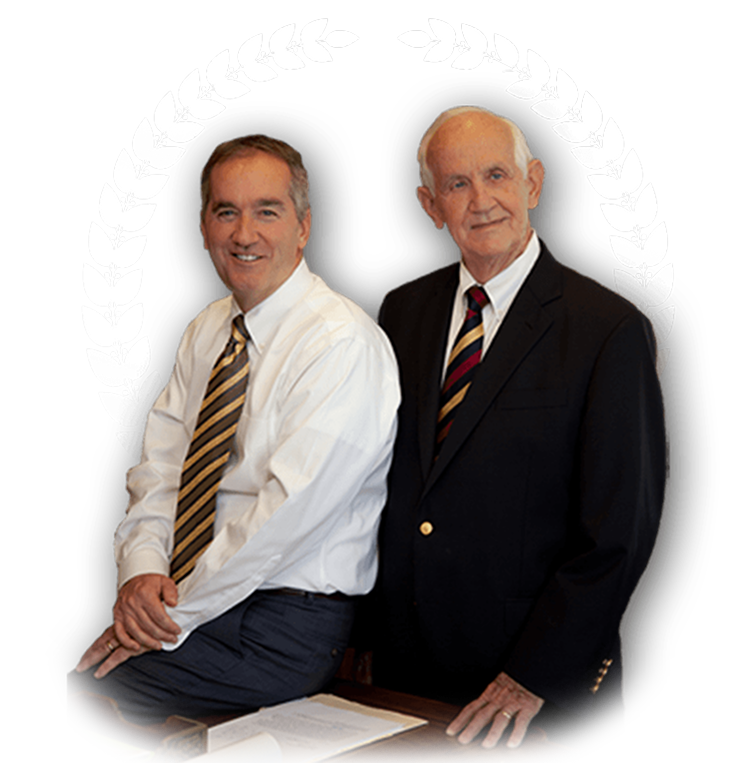
Charles P. Ward has practiced law since 1989 and began his career with a clerkship at the Indiana Supreme Court under Justice Richard M. Givan. He carries the AV Preeminent Peer Review Rating from Martindale-Hubbell, the highest available rating for legal ability and professional ethics. Charlie has been named a Super Lawyers honoree annually since 2005 and is admitted to practice before both the Northern and Southern Districts of the U.S. District Court in Indiana.
Donald W. Ward has been licensed in Indiana since 1954. Before dedicating his practice to plaintiff-side injury work, Don served as Deputy Corporation Counsel for the City of Indianapolis from 1975 to 1980. He received the Stalwart Award from the American Association for Justice, recognizing 25 years of sustained advocacy, and has maintained his membership in the organization since 1958. Don also served on the Character and Fitness Committee for the Indiana Board of Law Examiners.
The firm has recovered millions of dollars for personal injury and motorcycle accident clients throughout Indiana. If you need a personal injury lawyer in Bloomington, IN, Ward & Ward Personal Injury Lawyers has the background to handle the challenges specific to motorcycle claims.
Understanding Motorcycle Accident Cases
Damages, Liability, and Compensation for Motorcycle Accident Cases
Motorcycle crashes produce injuries at rates and severity levels that exceed most other motor vehicle accidents. The absence of an exterior frame, airbags, and seatbelts means the rider absorbs the full force of impact.
Economic damages often include emergency trauma care, orthopedic surgery, skin grafting, extended physical therapy, and months of lost wages. When injuries are permanent, a claim for reduced future earning capacity becomes part of the case. Non-economic damages compensate for physical pain, emotional distress, scarring, and loss of the ability to participate in activities that defined the person’s life before the accident.
Liability follows the same negligence framework that applies to all Indiana motor vehicle cases: duty, breach, causation, and damages. But motorcycle cases add difficulty. Insurance adjusters and defense attorneys frequently argue that the rider was traveling too fast or otherwise contributing to the crash, even when the evidence does not support those claims. Indiana’s comparative fault rule under IC 34-51-2 means every percentage point of fault assigned to the rider reduces the recovery dollar for dollar.
What Are Important Aspects of a Motorcycle Accident Case?
Motorcycle claims carry challenges that do not exist in most car accident cases. Recognizing them early can shape the outcome.
- Adjuster and jury bias. Insurance companies know that some jurors carry negative perceptions of motorcyclists. Adjusters exploit that during negotiations. Countering it requires physical evidence and witness testimony that separates bias from reality.
- Helmet use. Indiana does not require adult riders over 18 to wear helmets. Insurance companies will still argue that a helmetless rider contributed to the severity of head injuries. How this argument is addressed can affect the value of the claim.
- Scene evidence. Motorcycle crash scenes tell a story. Gouge marks, debris patterns, tire tracks, and the final resting position of the bike help reconstruct what happened. This evidence is temporary, and an attorney who acts early can preserve it.
- Insurer defense tactics. Carriers assign blame to riders as standard practice, scrutinizing the rider’s speed, lane position, licensing, and experience. The attorney’s job is to redirect that inquiry toward the driver who caused the crash.
What Is the Motorcycle Accident Case Timeline?
Motorcycle accident cases follow a general progression, though the timeline varies depending on the severity of injuries and the willingness of the insurer to negotiate.
- Medical treatment and stabilization. Motorcycle injuries often require extended recovery. Broken bones, internal injuries, and nerve damage can take months to treat. No case should settle before the full scope of medical needs is understood.
- Investigation. The attorney collects the police report, medical records, photographs, witness statements, and available video footage. Accident reconstruction may be necessary in disputed-fault cases.
- Demand and negotiation. Once the medical picture is complete, the attorney submits a demand to the at-fault driver’s insurer. Insurer defense strategies in motorcycle cases tend to be more aggressive than in car accident claims, and negotiation may take longer.
- Litigation. If the insurer refuses to offer fair compensation, the attorney files suit. Indiana’s two-year statute of limitations under IC 34-11-2-4 sets the filing deadline. Discovery, depositions, and potentially trial follow.
What Should You Bring to Your Motorcycle Accident Consultation?
Bringing documentation to the initial consultation helps the attorney assess your claim from the start. Collect what you can, but do not delay if some items are unavailable.
- The police accident report or report number
- Medical records, bills, and imaging related to your injuries
- Photographs of the crash scene, your motorcycle, and the other vehicle
- Your insurance policy and any information about the other driver’s insurance
- Names and contact information for any witnesses
Your consultation with Ward & Ward Personal Injury Lawyers is free. The attorney will review the circumstances, explain how Indiana law applies, and outline the options available to you.
What Are Important Indiana Legal Resources for Motorcycle Accident Cases?
Indiana law governs motorcycle accident claims, and federal data provides important context on the risks riders face. These resources can help you understand the framework that applies to your case.
- The NHTSA motorcycle safety page publishes national fatality and injury data for motorcyclists, along with safety guidance and helmet standards.
- The Indiana General Assembly publishes Title 34, which includes Indiana’s statute of limitations, the Comparative Fault Act, and other civil procedure provisions.
- The Indiana State Police maintains the state’s central crash report repository and provides access to individual reports.
- The NHTSA data center tracks national crash statistics, including fatality rates for motorcyclists compared to other road users.
- The CDC Transportation Safety division publishes injury data and evidence-based crash prevention research.
Indiana imposes a two-year statute of limitations on personal injury claims under IC 34-11-2-4, measured from the date of the accident. The state’s modified comparative fault rule under IC 34-51-2 reduces compensation by the rider’s percentage of fault and bars recovery entirely if the rider is found more than 50% at fault. An attorney who understands these rules and how motorcycle cases are evaluated can advise you on the strength of your claim.
Reach Out to Ward & Ward Personal Injury Lawyers to Schedule a Consultation
Ward & Ward Personal Injury Lawyers represents motorcycle accident victims in Bloomington, IN, and across Indiana. If you were injured in a collision caused by another driver’s negligence, our attorneys will review the facts and explain your legal options during a free consultation. Contact us to schedule a meeting with a Bloomington, IN motorcycle accident attorney.
Contact Us Today!


Free Consultation
Talk to an experienced injury attorney
Contact Our Office Today
728 S Meridian St, Indianapolis, IN 46225