

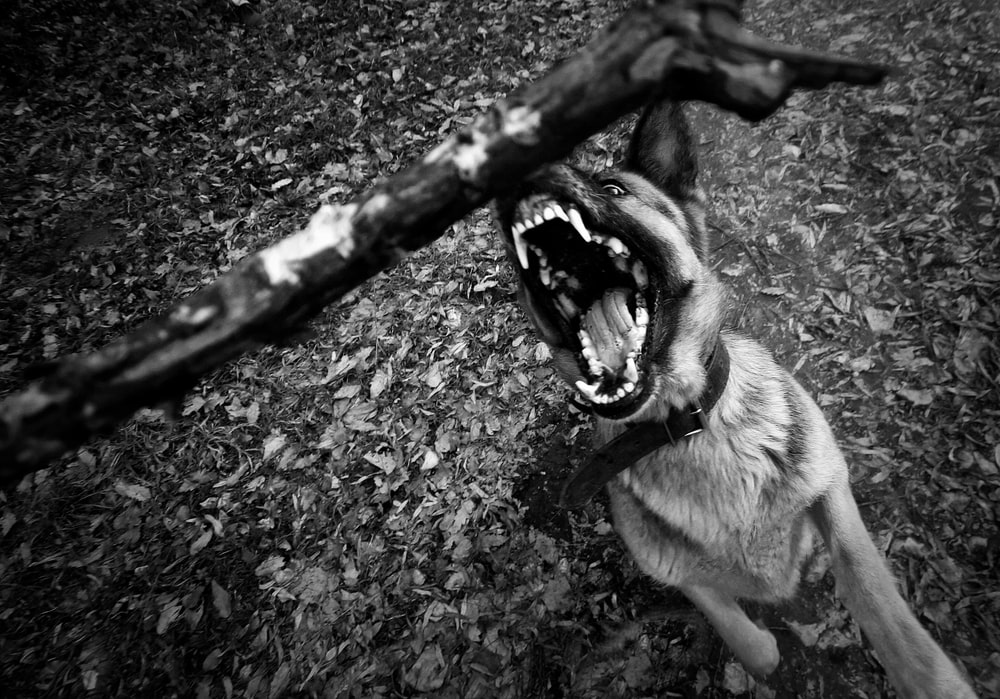
Helping injured clients understand their rights after a dog bite incident in Indiana.
If you or a family member has been bitten by a dog in Indiana, the legal question of whether the dog’s owner can be held responsible is more involved than most people expect. Ward & Ward Personal Injury Lawyers have represented dog bite victims and other injured clients throughout Indiana for decades. If you need an Indiana dog bite liability lawyer, contact our office for a free consultation.
Dog Bite Liability Lawyer Indiana
A dog bite liability case arises when a person is injured by a dog, and the owner’s negligence or knowledge of the animal’s dangerous tendencies makes them legally responsible for the harm. Indiana does not follow a pure strict liability approach to dog bites. Instead, the state applies what is commonly referred to as a modified one-bite rule, combined with traditional negligence principles.
Under that framework, a dog bite victim in Indiana generally must prove one of two things. Either the owner knew or should have known that the dog had dangerous propensities, such as prior bites, aggressive behavior, lunging at people, or the owner was negligent in controlling or restraining the animal. The second path is the one most dog bite cases follow. A dog that was never leashed, a gate left open, an owner who ignored a local ordinance requiring restraint. These are negligence questions, and they do not require proving the dog bit someone before.
Types of Dog Bite Cases We Handle in Indiana
Dog bite cases across Indiana arise from a range of circumstances. Ward & Ward Personal Injury Lawyers handles claims in the following categories:
- Attacks by unleashed dogs. Many Indiana municipalities have leash laws requiring dogs to be restrained in public areas. An owner who allows a dog to roam freely in violation of a local ordinance and that dog bites someone has committed what Indiana courts treat as negligence per se, a violation of a safety rule that constitutes negligence on its own.
- Bites on the owner’s property. A dog that bites a guest, a delivery driver, or a child visiting the home can create liability for the property owner. Indiana courts have applied negligence standards in dog bite cases without regard to whether the victim was an invitee, licensee, or trespasser, which distinguishes dog bite claims from other premises liability matters.
- Attacks on postal workers and government employees. Under Indiana Code § 15-20-1-3, a dog owner faces strict liability when the dog bites a person who is peaceably carrying out official duties under federal, state, or postal regulations. This is one of the few situations where Indiana imposes liability regardless of the dog’s prior history.
- Child dog bite injuries. Children represent a disproportionate share of dog bite victims, and the injuries tend to be severe. Facial bites. Scalp lacerations. Permanent scarring. Indiana courts recognize that children cannot be held to the same standard as adults when evaluating defenses like provocation, because young children may not understand the risk of approaching an unfamiliar dog.
- Repeat-offender dog attacks. When a dog has bitten before, and the owner kept the animal without taking additional precautions, the liability case is strongest. Prior incidents, animal control complaints, and neighbor testimony all serve as evidence that the owner was on notice about the danger.
- Landlord liability. A landlord who knew a tenant kept a dangerous dog and had the authority to require its removal but failed to act may share liability for a bite that occurs on the property. These claims require proving that the landlord had specific knowledge of the dog’s dangerous behavior, not just general awareness that a tenant owned a pet.
- Wrongful death from dog attacks. Fatal dog attacks, while less common than non-fatal bites, do occur. According to CDC mortality data, an average of 43 people per year died from dog attacks in the United States between 2011 and 2021. Surviving family members of a fatal attack victim may bring a wrongful death claim against the dog’s owner.
Why Choose Ward & Ward Personal Injury Lawyers as My Dog Bite Liability Lawyer in Indiana?
Attorneys Grounded in Decades of Indiana Injury Law
Donald W. Ward was admitted to the Indiana Bar in 1954. He served as both a Deputy Trial Prosecutor for Marion County and Deputy Corporation Counsel for Indianapolis before co-founding the firm. He is a Fellow of the Indiana Bar Foundation and a past President of the Indiana Trial Lawyers Association. Charles P. Ward has practiced since 1989 and holds an AV Preeminent Peer Review Rating from Martindale-Hubbell. He has been named to Super Lawyers annually since 2005 and is recognized by Best Lawyers in America for personal injury litigation.
Ward & Ward Personal Injury Lawyers has helped clients recover millions of dollars in personal injury matters across Indiana. We handle dog bite cases on a contingency fee basis. No upfront fees. No attorney costs unless we recover compensation for you.
What Is Important to Understand About a Dog Bite Case?
Damages, Liability, and Compensation for Dog Bite Cases
Dog bite injuries are often more expensive to treat than people realize. The wound itself may require emergency care, surgical repair, antibiotics, and follow-up visits. Facial bites frequently involve reconstructive surgery. The compensation available in a dog bite case reflects the full scope of these costs.
Economic damages include emergency room bills, surgical costs, prescription medication, physical therapy, and any future medical treatment the injuries require. Lost wages if the injury prevents you from working. For children, the projected cost of reconstructive procedures as they grow.
Non-economic damages cover the rest. Physical pain from the bite and the treatment that followed. Emotional distress. Fear of dogs that didn’t exist before the attack. Scarring that is visible and permanent. Loss of the ability to enjoy outdoor activities, visit friends’ homes, or walk through a neighborhood without anxiety.
Liability depends on whether the owner was negligent or had prior knowledge of the dog’s dangerous tendencies. Indiana’s modified comparative fault rule under Indiana Code § 34-51-2-6 applies to dog bite cases. If your own fault exceeds 50 percent, for example, if you provoked the dog, recovery is barred. Below that threshold, the award is reduced by whatever percentage of fault is assigned to you. Homeowners and renters insurance policies typically cover dog bite liability, though some insurers exclude certain breeds or cancel policies after a first incident.
What Are Important Aspects of a Dog Bite Case?
Dog bite claims involve evidentiary considerations that can make or break the case. Several require attention immediately after the attack.
- Report the bite to local animal control. The official report creates a record of the incident and may trigger a quarantine and behavioral evaluation of the dog. It also documents whether the dog had prior complaints on file.
- Get medical attention the same day, even if the wound appears minor. Dog bites carry a high risk of infection, and delayed treatment gives the insurance company a basis to argue the injuries were not serious.
- Photograph everything. The wound before treatment and during recovery. The location where the attack occurred. The dog, if you can do so safely. Broken fencing, open gates, absent leashes, anything that shows the owner failed to control the animal.
- Identify witnesses. Neighbors, bystanders, postal carriers, or delivery drivers who witnessed the attack or have observed the dog’s behavior in the past can provide testimony supporting the claim.
- Do not accept a settlement offer from the dog owner’s homeowners insurance without consulting an attorney. Early offers rarely account for the full cost of treatment, future surgeries, or the non-economic impact of the injuries.
What Is the Dog Bite Case Timeline?
Dog bite cases in Indiana follow a general timeline, though the pace depends on the severity of the injuries and the complexity of the liability issues.
- Medical treatment and documentation are the priority. Your attorney should not push for settlement before the full extent of the injuries is known, particularly when scarring or reconstructive surgery is involved.
- An investigation follows. Your attorney gathers the animal control report, medical records, photographs, witness statements, and any evidence of the dog’s prior behavior or the owner’s negligence.
- The insurance claim is filed with the dog owner’s homeowners or renters insurance carrier. Negotiations begin.
- If the insurer refuses a fair settlement, your attorney files a lawsuit within Indiana’s two-year statute of limitations under Indiana Code § 34-11-2-4.
- Litigation involves discovery, depositions, and pre-trial motions. Some cases settle during this phase. Others go to trial.
What Should You Bring to Your Dog Bite Consultation?
Bringing documentation to the initial meeting helps the attorney evaluate your case faster. If available, gather the following:
- The animal control report, if one was filed
- Medical records and billing statements from treatment of the bite
- Photographs of the wound, the location of the attack, and the dog
- Contact information for any witnesses
- Insurance information for the dog’s owner, if known
- Any correspondence from the owner or their insurance company
Your attorney will review the facts, assess liability, and explain how the process works. This consultation is free and carries no obligation.
What Are Important Indiana Legal Resources for Dog Bite Cases?
Indiana’s dog bite liability framework draws on a combination of state statutes, common law negligence principles, and local ordinances. These resources provide a starting point:
- Indiana Code § 15-20-1-3 imposes strict liability on dog owners when the dog bites a person carrying out official duties under federal, state, or postal law.
- Indiana Code § 34-11-2-4 sets the statute of limitations at two years from the date of the bite for personal injury claims.
- Indiana Code § 34-51-2-6 establishes the modified comparative fault rule. Recovery is barred if the claimant’s own fault exceeds 50 percent.
- The CDC’s dog-bite mortality data provide statistics on dog-bite-related fatalities in the United States.
- The Indiana General Assembly website provides full access to the Indiana Code, including the animal control provisions in Title 15, Article 20.
Reach Out to Ward & Ward Personal Injury Lawyers to Schedule a Consultation
If you or a family member has been bitten by a dog in Indiana, Ward & Ward Personal Injury Lawyers can evaluate your case and advise you on the legal options available. We handle dog bite cases on a contingency fee basis. No upfront costs, and no attorney fees unless we recover compensation on your behalf. Contact us to schedule a free case review with an Indiana dog bite liability attorney at Ward & Ward Personal Injury Lawyers.